
Ear irrigation
 +381 64 4184 444
Ear irrigation is a simple and safe procedure used to remove excess earwax or plugs that cause discomfort. Accumulated wax can lead to reduced hearing, a feeling of blockage, pressure, or ringing, so timely care is important for ear health. This service is suitable for children, adults, and seniors dealing with clogging or discomfort. While home remedies exist, self-removal often risks pushing wax deeper or damaging the eardrum. That is why ear irrigation should be performed under the supervision of an ENT specialist. Our team at Dr Prlja Medical in Belgrade provides careful, professional care using modern equipment and proven methods. Book an appointment and get rid of unpleasant ear blockage.

When is ear irrigation recommended for adults and children?
Medical ear irrigation is a procedure that removes accumulated earwax using lukewarm saline or a solution at body temperature. Ear irrigation by a doctor is not a preventive method. It is done only when there is a plug or symptoms suggesting blockage. We recommend periodic checkups at our ENT clinic in Belgrade and ear irrigation for adults who often produce earwax. Routine “blind cleaning” is never advised. If needed, the doctor may recommend drops or a spray to soften the wax and reduce the need for repeated procedures. The goal is to preserve the natural protective role of earwax and avoid excessive treatment.
Ear irrigation in children is often necessary because plugs form more frequently. Their external ear canal is narrower and more sensitive. For this reason, the doctor uses a smaller nozzle and lower pressure. During the procedure, the child sits or lies on the side, with the head slightly tilted so water and wax can flow out. Ear irrigation in children is performed under constant visual control with an otoscope and with the full attention of our ENT team. This approach protects the ear canal skin and reduces the risk of irritation.
Symptoms that indicate the need for an ENT examination
If you notice symptoms that may indicate hearing loss, hear noises (ringing or rustling), or feel your ear is blocked — these are signals to visit an ENT specialist. The following symptoms clearly indicate the need for ear irrigation:
- Weakened or muffled hearing often results from a cerumen plug. It creates a mechanical barrier for sound. Hearing loss may affect one or both ears. Middle ear infections also cause conductive hearing loss. A sudden drop in hearing is an urgent condition. Fast ENT evaluation and audiometry are required. Cerumen is removed in the clinic, and hearing usually improves.
- A feeling of blockage or pressure in the ears may be caused by earwax, swelling of the canal skin, or fluid in the middle ear. Eustachian tube dysfunction increases pressure and noise. It often appears after a cold, allergies, or a flight. If the sensation continues or is accompanied by pain and fever, an ENT visit is essential.
- Tinnitus — sound without an external source (ringing, whistling, or rustling) can have several causes:
- earwax buildup
- ear inflammation
- acoustic trauma
- age-related hearing decline
- Ménière’s disease
- auditory nerve damage
- Ear pain, itching, and redness often suggest otitis externa. Itching progresses to pain, especially when touching the ear. The canal skin may be red, with discharge or crusts. In severe cases, swollen lymph nodes appear. Treatment includes cleaning and local drops as prescribed by a doctor.
- Recurrent ear infections require an ENT evaluation of the cause. Risk factors include swimming, humidity, and irritation from cotton swabs. Middle ear infections are more common in children. Diagnostics may include swabs, tympanometry, and audiometry. Therapy and prevention plans are tailored individually.
Is the procedure safe for people with permanent hearing loss?
For users of hearing aids or cochlear implants, a blocked canal can make adaptation harder and worsen sound quality. Ear irrigation by a doctor improves the fitting and functioning of these devices. In some rare cases, the procedure may also help remove small particles or foreign bodies, provided an otoscopic exam has already confirmed it is safe.

What are the alternatives to ear irrigation and when are they recommended?
Ear irrigation is not always the right choice — and for good reason.
- If there is a perforated eardrum, active infection, or chronic inflammation, irrigation may worsen the condition or lead to complications.
- Irrigation is not recommended for children with ear tubes or after recent ear surgeries.
- The same applies to people with weakened immunity — such cases require caution.
That is why a specialist ENT exam is necessary before any intervention, to confirm whether irrigation is safe for you. A proper evaluation ensures the safety and effectiveness of your treatment. Some possible alternatives include:
- Microsuction of earwax and secretions– precisely removes cerumen without water.
- Classical cerumen removal (instrumental earwax cleaning) – done under microscope guidance if needed.
- Ear drops to soften wax – prepare the plug for safe removal in the clinic.
- Antimicrobial drops – used in case of infection before any removal, but only with a doctor’s recommendation.
What does the ear irrigation exam and procedure look like?
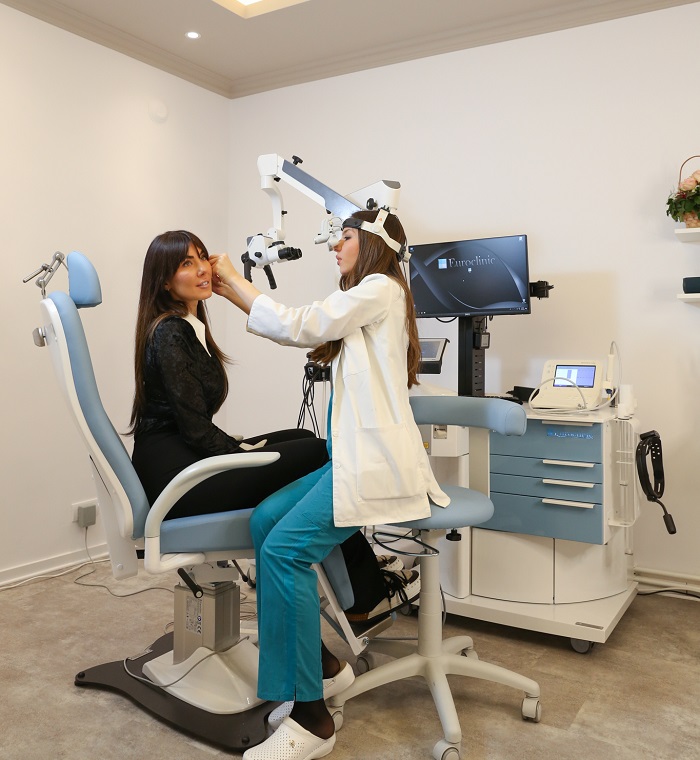
You can undergo ear irrigation in Belgrade in the comfortable setting of Dr Prlja Medical clinic. At your visit, a member of our team will first examine your ear canal with an otoscope to identify the cause of your symptoms and ensure the procedure will be safe. If everything looks fine, we proceed with the irrigation. However, if the standard exam raises any doubts, a microscopic ear examination may be performed.
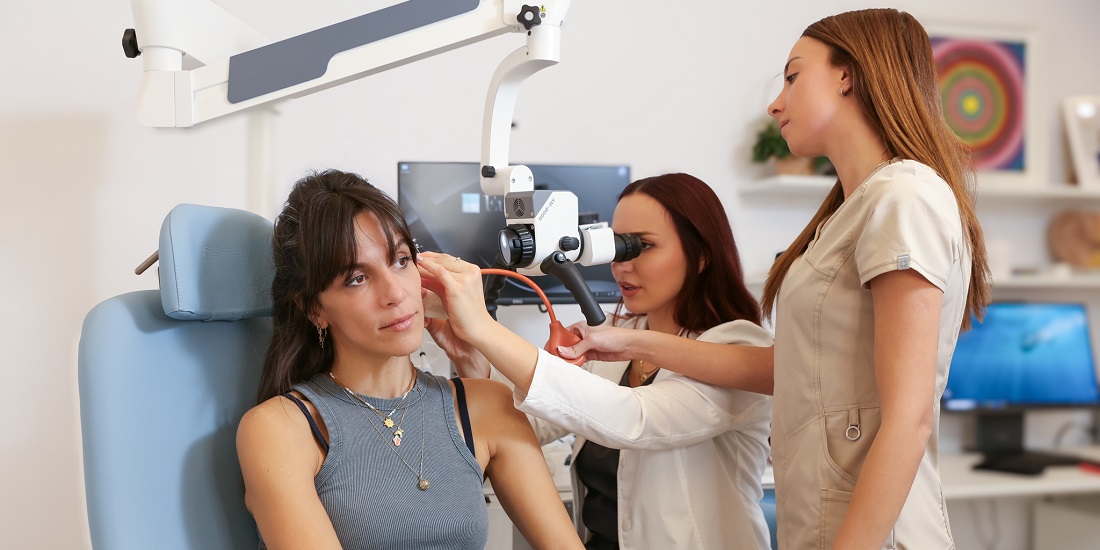
For ear irrigation we use lukewarm water, carefully adjusted to body temperature, so it does not cause unpleasant vertigo. With a special syringe, the water jet is directed through the ear canal to break down and gently wash out the plug. This step is delicate and precise, always carried out under professional supervision. The procedure usually lasts 5–10 minutes, depending on the amount of wax.
During medical irrigation you may feel mild pressure or the flow of water, which is normal and quickly passes. If infection, pain, or sensitivity are present, we adjust the pace to keep you comfortable. In rare cases, temporary dizziness, mild burning, or irritation may occur; these effects are very uncommon and disappear quickly. If even slight discomfort appears, the procedure is stopped — because your comfort and safety are our priority.
After medical ear irrigation, you will receive instructions for further care
If you need ear irrigation in Belgrade, our clinic provides a quick and effective procedure, along with useful aftercare tips. Once irrigation is complete and the plug is removed, most patients feel relief right away. In such cases, the doctor gives short advice to prevent wax from building up again. This usually includes:
- avoiding cotton swabs
- carefully drying the ear after bathing or swimming
- prescribing ear drops that calm irritation and protect against bacteria if mild redness or inflammation is noticed
In less common cases, when a stronger infection is present, broader therapy may be required after irrigation. If the issue is not only wax but also possible hearing damage or fluid behind the eardrum, the doctor may suggest further tests and hearing assessments for children and adults. If necessary, a follow-up visit is scheduled to ensure the ear is clear and symptoms have resolved. This way, every patient leaves our clinic with a clear plan and confidence that the problem is solved.
Dr Prlja Medical clinic offers quick and effective ear irrigation in Belgrade
Proper ear care is very important for daily quality of life. When you notice blockage, reduced hearing, or uncomfortable ringing, the solution doesn’t have to be complicated. A simple procedure like ear irrigation often brings fast relief and restores normal hearing. Timely checkups prevent more serious issues and allow safe treatment of symptoms. At Dr Prlja Medical clinic in Belgrade, every patient receives attention, gentle care, and support from a professional team that understands how unpleasant these problems can be. If you recognize the symptoms, it is best to act early and consult a specialist. Contact us and schedule ear irrigation in Belgrade at an easily accessible location – take the first step toward better and healthier hearing.
Achieve flawless results with personalized treatments that highlight your natural beauty.
Frequently Asked Questions and Answers
Can ear irrigation be done in people with diabetes or chronic illnesses?
Yes, but with extra caution. For patients with diabetes or weakened immunity, alternative methods such as aspiration are often recommended, since the canal skin heals more slowly and is more prone to infection.
Does ear irrigation affect balance?
During the procedure, short dizziness may occur if the water is not at the right temperature. That is why doctors always use a solution close to body temperature to avoid inner ear irritation.
How long does recovery take if mild irritation occurs after irrigation?
If redness or mild sensitivity appears, symptoms usually disappear within one to two days. The doctor may prescribe drops that calm the mucosa and speed up recovery.
Can ear irrigation damage the eardrum?
When performed by a specialist, the risk is minimal. Damage may occur only if there is an undetected perforation or if improper pressure is applied. That is why an otoscopic exam always precedes the procedure.
How long does the effect last after irrigation?
The effect is immediate and lasts until wax builds up again. Some people do not form plugs for years, while others are prone to faster accumulation. Regular checkups help detect problems early.
What to do if symptoms return soon after irrigation?
If plugs reappear quickly, the doctor may recommend additional tests to find the cause of frequent buildup. Sometimes the reason is the shape of the canal, skin changes, or infections. In such cases, local therapy combined with regular checkups is advised.
Experiences of those who chose us
My experience with Sara was actually my first treatment ever. I had always been skeptical until I met her through a mutual friend. All it took was seeing her flawless skin to completely trust her. Not only does she maintain a natural look, which I really appreciate, with minimal corrections, but she’s also a wonderful friend and, when needed, a great therapist. I always leave her office feeling satisfied and smiling. P.S. She’s the only one who managed to solve my under-eye bags!

-Ksenija Knezevic
Singer
I met Sara a few years ago, and after the first treatment, I was certain – this woman knows what she's doing! I trust her completely, and I love her approach, honesty, and directness. There’s no exaggeration or unnatural looks – just a refreshed, rested, and natural appearance. We always have so much fun, laughing, while also enhancing our beauty. After seeing Sara, I look like I’ve just returned from the best vacation!
-Matea Milosavljevic
Actress
I have known Sara Prlja for more than 15 years, and I can say that everything she envisioned, she has achieved. She has always worked on herself, invested in her knowledge and growth. Her clinic is the perfect place where you will feel comfortable and relaxed, and the service is top-notch. I highly recommend her and her work!

-Aleksandar Dramicanin
Hair & Makeup Artist
Love, trust, and respect are the foundation of every strong and lasting relationship, whether personal or professional. From a medical perspective, we know how essential support is in any healing process, but for me, the relationship between a doctor and a patient is one where trust is especially important. I have complete trust in Sara and always feel confident that everything will be okay. That trust creates a sense of safety and allows real progress, while care and connection give us the space to grow together. I have never viewed my relationship with Sara as just professional, because every time I visit the clinic, it feels more like coming to people I trust and feel close to rather than simply working with a provider. That is the X factor that makes this experience truly valuable to me.

-Nataša Kovačević Njezvanova
Influencer
My experience with Sara has been exceptional in every way. Above all, she is a genuinely kind person and an outstanding professional. Together with her wonderful team, she creates an atmosphere free of fear, where trust comes naturally. I am delighted with the results and feel beautiful, confident, and happy. I wholeheartedly recommend her.

-Mahrina
Singer
I don’t easily trust anyone with my skin care, but the moment I stepped into Dr Prlja Medical, I felt safe and confident in my choice. I wouldn’t replace Sara for anyone else. She combines expertise, warmth, and a genuine love for her profession. Every treatment leaves me feeling refreshed and renewed, both physically and emotionally. Trust me when I say that you are in the right place.

-Anja Ćurčić
Actress
Related Services

Assessment of nasal septum deviation
Cerumen removal (earwax cleaning)
Ear infection
Microscopic ear examination
Otoplasty
Specialist ENT ear examination
Specialist ENT nasal examination
Tinnitus Treatment

Tympanometry
Vertigo Treatment