
What is a cochlear implant and who is it for?
 +381 64 4184 444
Hearing loss often leads people to avoid conversations, withdraw from social life, and feel insecure in everyday situations. Even the simplest things—like talking with family, watching TV, or running errands outside the home—become exhausting. When hearing aids are no longer enough, a cochlear implant may offer a new solution. Dr Prlja Medical Clinic in Belgrade will explain what a cochlear implant is, how it works, who qualifies for the procedure, and what the recovery looks like. Learn how this technology can improve your quality of life and restore your confidence in daily communication.
What is a cochlear implant and how does it work?
A cochlear implant is a medical device that helps people with severe hearing loss to hear again. Unlike a hearing aid, which only amplifies sound, a cochlear implant bypasses the damaged part of the inner ear and directly stimulates the auditory nerve. It doesn’t make sounds louder—it converts them into a form the brain can understand. This makes it suitable for people who no longer benefit from regular hearing aids.
The difference between a hearing aid and a cochlear implant
Although both devices are used to improve hearing, the difference between a hearing aid and a cochlear implant is significant. A hearing aid is intended for people who still have enough functional cells in the inner ear. It amplifies sound, making it easier to hear.
A cochlear implant, on the other hand, is used when amplification is no longer effective. Instead of simply making sounds louder, the implant converts them into electrical impulses and sends them directly to the auditory nerve. This allows hearing even in cases of severe hearing loss.
In practice, this means that a hearing aid helps people with mild to moderate hearing loss, while a cochlear implant is intended for those with severe or complete hearing loss, where standard devices are no longer effective.
Components of a cochlear implant and their function
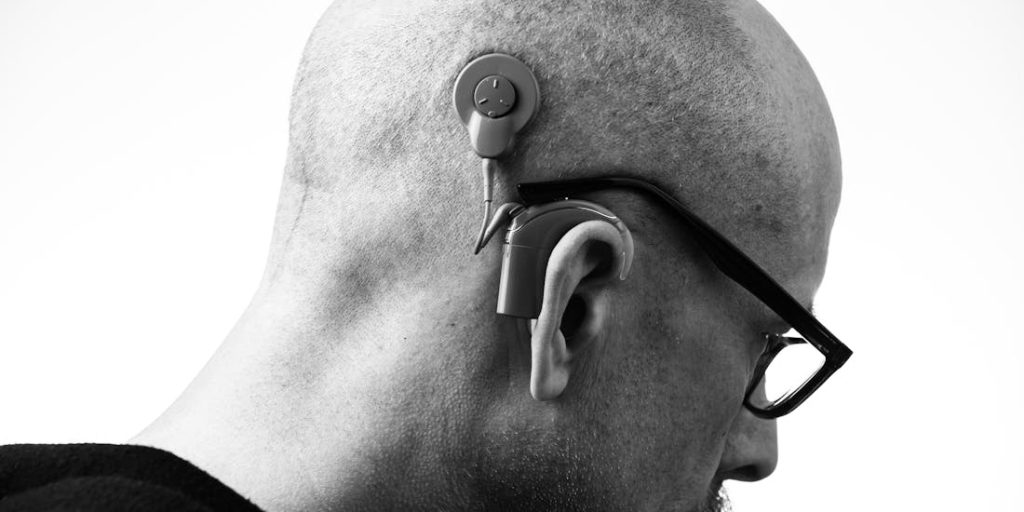
How does a cochlear implant work? It consists of two main parts – external and internal.
The external part is worn behind the ear and includes a microphone, sound processor, and transmitter. The microphone picks up sounds from the environment, the processor converts them into electrical signals, and the transmitter sends them to the internal part.
The internal part is surgically placed under the skin and within the inner ear. It contains a receiver that accepts signals from the external part and sends them to electrodes placed in the cochlea. These electrodes directly stimulate the auditory nerve, which then sends the information to the brain, where the signal is recognized as sound.
Thanks to this precise and direct stimulation, the implant allows people with severe hearing loss to perceive speech and important sounds again.
Who can be a candidate for a cochlear implant
A cochlear implant is not for everyone with hearing loss. Candidates are usually people with severe to total hearing loss in one or both ears, where hearing aids no longer provide sufficient benefit. Before surgery, a thorough diagnosis is performed, including audiometry, tympanometry, and other ENT exams. In some patients, symptoms like pressure in the ears may indicate the need for further hearing assessment. A professional team determines whether there is a medical reason for implantation and estimates the likelihood that the implant will improve hearing and quality of life. Below, we explain how candidacy is assessed in children and adults.

Cochlear implants in children
Children with severe hearing loss may face major speech development difficulties. That’s why implantation is recommended as early as possible, often between 12 and 24 months of age. Early detection and timely intervention greatly improve the chances of developing speech understanding and communication skills.
After the implant is placed, the child must go through hearing and speech rehabilitation. Working closely with a speech therapist and a specialized team is essential for successful results.
Cochlear implants in adults
In adults, a cochlear implant can be a good option for those who gradually lost their hearing and no longer benefit from hearing aids. The procedure is especially successful in individuals who previously had developed hearing and speech comprehension.
Adults usually adapt more easily to hearing through an implant, but rehabilitation is still important. The brain must learn to recognize the new signals.
When the surgery is recommended
Cochlear implant surgery is considered when three basic conditions are met:
– Severe or complete hearing loss, especially if it affects daily communication.
– Limited benefit from hearing aids, even when properly adjusted.
– A functioning auditory nerve, so the implant can send signals the brain can process.
What does the cochlear implant procedure look like
The procedure is performed under general anesthesia and takes about two hours. The internal part of the device is placed under the skin, and electrodes are inserted into the cochlea.
The patient usually stays in the hospital for one day. The external part is not activated right away—it’s turned on two to four weeks later, once the surgical site has healed. At that time, the device is adjusted and adaptation begins.
This is a routine procedure for specialized teams, and complications are rare. Most patients quickly return to daily activities and move on to the next phase—rehabilitation.
Rehabilitation after cochlear implantation
After receiving a cochlear implant, the patient begins a period of adjustment and rehabilitation. Although the implant delivers sound, the brain must learn to identify and interpret these new signals. This process takes time, patience, and regular practice.
Rehabilitacija uključuje rad sa defektologom ili logopedom, posebno kod dece, ali i kod odraslih koji duže nisu koristili sluh. U ovom periodu se prati napredak u razumevanju govora i reagovanju na zvuke. Kod osoba koje su pre operacije imale i tinitus, u nekim slučajevima dolazi do poboljšanja. U drugim slučajevima, koristi se posebno lečenje tinitusa kako bi se dodatno ublažili neprijatni zvučni signali.

Most common questions and concerns from patients
Here are some of the most common questions and concerns patients have about cochlear implant surgery:
- Is the surgery painful? No. The procedure is done under general anesthesia, so the patient does not feel pain during implantation. Mild pain or discomfort may occur in the days after surgery but usually goes away quickly.
- When will I start hearing? The implant is activated a few weeks after surgery. That’s when the adjustment to new sounds begins. Improvement happens gradually through practice and rehabilitation.
- Will I hear normally? Sounds may seem different at first, but over time most patients develop good speech understanding, especially with support from a speech therapist.
Why choose Dr Prlja Medical for this procedure
At Dr Prlja Medical Clinic in Belgrade, cochlear implant surgery is not just a technical procedure—it is part of comprehensive, carefully planned care. Our team combines modern medical equipment with many years of experience in ENT surgery and hearing rehabilitation.
Patients choose us because we offer:
- detailed diagnostics and individual evaluation of each case
- an expert surgical team with successful results
- continuous support before and after surgery
- access to rehabilitation in cooperation with speech therapists and special educators
A cochlear implant can improve your daily life
A cochlear implant changes how you experience the world around you. Many patients who have lived for years with limited hearing can once again hear speech, recognize sounds in their environment, and actively participate in daily activities. Whether it is a child developing speech or an adult wanting to regain control over communication, a cochlear implant can bring significant improvement in quality of life. Proper evaluation, expertly performed surgery, and consistent rehabilitation are the keys to success. If you or someone close to you has severe hearing loss, our ENT clinic in Belgrade can be the first step toward a solution.