
Instillation of medication into the middle ear under a microscope
 +381 64 4184 444
Ear problems such as pain, frequent infections, or reduced hearing require professional help. Home treatment on your own often worsens the condition, which is why you need a doctor who uses modern methods. Instillation of medication into the middle ear under a microscope is a safe and precise procedure that delivers the drug directly to the problem area. This method provides faster relief and more effective therapy compared to standard ear drops. At Dr Prlja Medical in Belgrade, your health is cared for by an experienced ENT team. Schedule an appointment today and ensure safe, high-quality medical care for your hearing.
The importance of instilling medication into the middle ear for ENT health
Instillation of medication into the middle ear under a microscope is a precise way of delivering a therapeutic solution directly to the middle ear with the help of high magnification. This method allows the ENT doctor to clearly see and target the application site, which increases effectiveness and reduces the risk of unwanted effects.

Unlike regular ear drops, which may act only on the surface and not address the real cause of discomfort, the microscope-guided procedure ensures the medication reaches the exact damaged or inflamed area. This accelerates recovery and reduces patient discomfort. In our specialized ENT clinic in Belgrade, each patient receives safe and carefully tailored care.
Benefits of instilling medication into the middle ear under a microscope
Instillation of medication into the middle ear under a microscope is a gentle and effective way to deliver therapy directly where it is needed. Unlike the insertion of ventilation (tympanostomy) tubes, which are surgically placed through the eardrum, instillation is non-invasive and a good choice when therapy through the ear works or when a targeted local intervention is required. Ventilation tubes are used for patients with chronic or frequent secondary infections, or when constant drainage and ventilation of the middle ear are necessary. The benefits of instillation include:
- No need for anesthesia or incisions.
- Shorter procedure time without hospital stay.
- Lower risks of complications such as permanent eardrum damage.
- Faster return to normal activities with less discomfort.
This approach provides patients with proper therapy without additional burden, supported by an experienced medical team.
When instillation is needed
Instillation of medication under a microscope is recommended in the following cases:
- Acute otitis media (acute middle ear infection) – antibiotic ear drops and, if needed, anti-inflammatory solutions are used to reduce infection and ear pain.
- Chronic otitis media (long-lasting or recurring infections) – combinations of antibiotics and corticosteroids are applied to control infection and reduce chronic ear inflammation.
- Complications after previous ear infections – in cases of slow recovery or persistent secretions, antiseptic or antibiotic solutions are used locally.
- Infections not responding to oral therapy – instillation allows the medication to act directly on the problem with stronger local effect.
- Situations where anatomical obstacles make treatment difficult – if the ear canal is narrow or blocks regular drops, microscope-guided instillation ensures the medicine reaches the affected area.
Self-application of ear drops at home is often imprecise and may result in ineffective or prolonged treatment. For this reason, the procedure is carried out in controlled conditions under the supervision of an ENT specialist team.
What does the procedure look like?
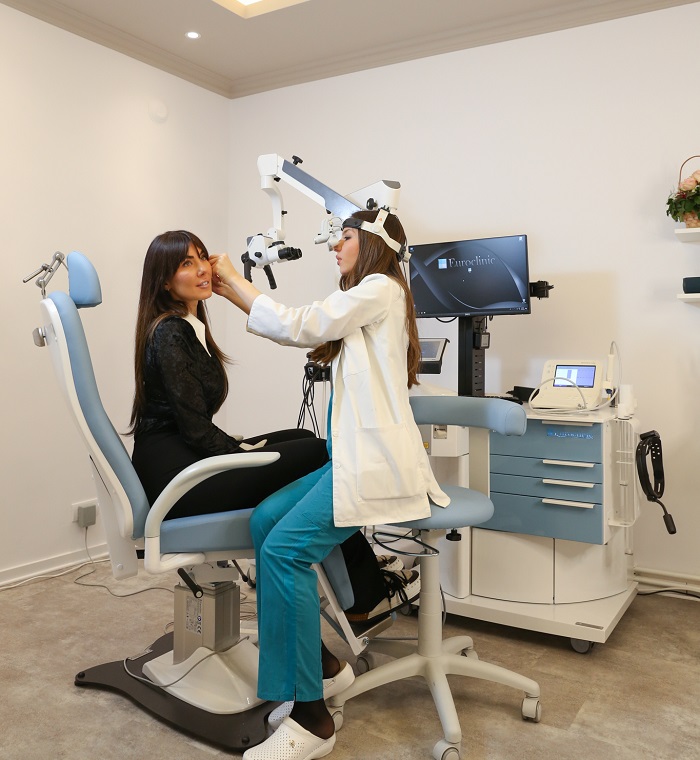
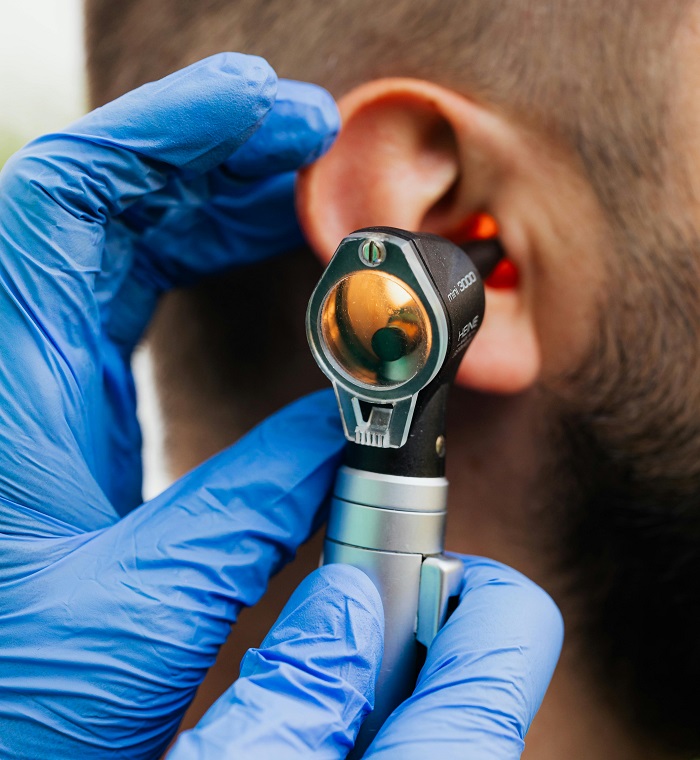
The procedure begins with a thorough examination using an otoscope or a microscopic ear exam, which allows a detailed view of the ear canal and eardrum. Once inflammation, infection, or another middle ear issue is confirmed, preparation for the procedure begins.
If necessary, ear cleaning is done beforehand (gentle removal of cerumen or secretions). This way, the medication can reach the right place. Then, under microscope guidance, the doctor carefully applies the medicine through the external ear canal. If the eardrum is intact, the medication is placed directly on its surface, where it can act locally and penetrate through microscopic pores.
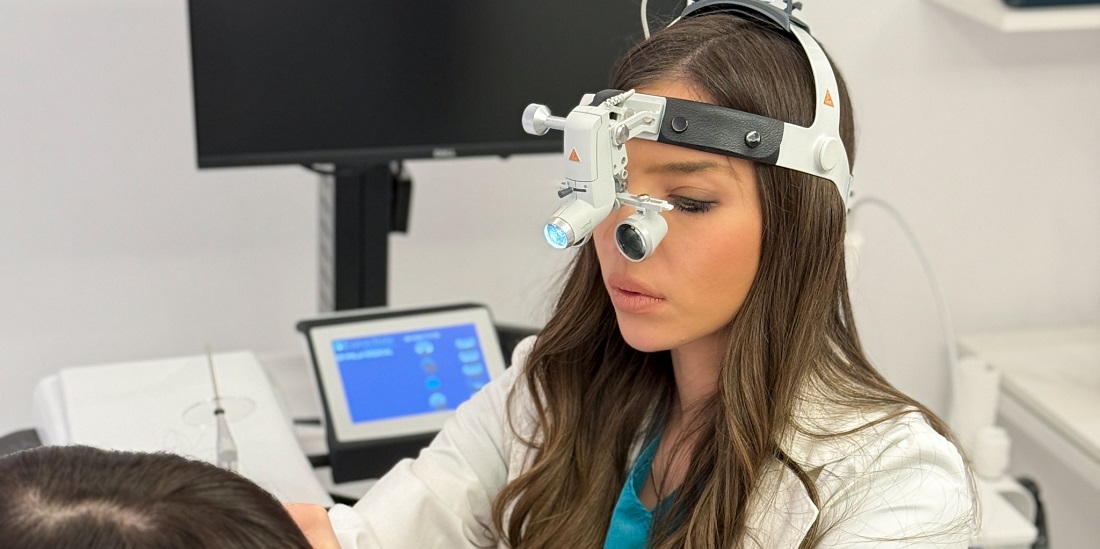
In cases where there is a small perforation of the eardrum or a special opening (for example, after a previously placed ventilation tube), the medication enters directly into the middle ear cavity and acts on the inflamed tissue. Special thin instruments or a precise pipette are used for application. They ensure the correct dosage and targeted delivery of the medication.
The entire procedure takes only 10–15 minutes. The patient may feel mild warmth or pressure, but not pain, as everything is performed carefully and under full visual control. The advantage of working with a microscope is that the doctor can see even the smallest details, reducing risks and increasing effectiveness.
Expected results
Usually, one to two instillations are recommended at intervals of 3 to 7 days, depending on the severity of symptoms and the speed of recovery. If discomfort persists or improvement does not occur, additional treatments may be advised by the specialist. Expected results include:
- Noticeable reduction of ear inflammation and discomfort within a few days
- Gradual improvement of hearing in conductive impairments
- Better opening and drainage due to normalized middle ear ventilation
Regular ear examinations allow the doctor to monitor progress and adjust the frequency of instillation if needed. In most cases, after just one or two procedures, patients report clear relief of symptoms and greater comfort in daily activities.
Risks and patient preparation
Instillation of medication into the middle ear under a microscope is considered a safe procedure. Still, like any medical intervention, it may rarely cause mild side effects. These are usually short-term irritation of the ear canal or a temporary feeling of pressure, while serious complications are almost never reported.
For the procedure itself, patients are advised to have a clean ear, without attempting self-cleaning with cotton swabs or similar tools. It is useful to bring medical records and a list of current medications so the doctor has a complete overview of the health condition. Before the visit, it is recommended to avoid heavy food or alcohol, as this may make cooperation during the procedure more difficult.
Next steps after instillation
After the medication instillation is completed, most patients can immediately return to daily activities with minimal restrictions. During the first few hours, relaxation is advised, as well as avoiding sudden temperature changes, such as direct wind or cold air currents.

Our recommendation is a follow-up visit after about 3 to 5 days. This timeframe allows the medication to begin working and gives the doctor a chance to evaluate the reduction of inflammation or fluid. The drug may remain active in the middle ear for several days. This depends on its formula and concentration strength, which contributes to longer-lasting relief of symptoms.
If discomfort returns or symptoms do not improve as expected, the doctor may adjust the therapy — this may include:
- an additional instillation of medication
- changing the type of drug (for example, a stronger antibiotic or adding an anti-inflammatory agent)
- moving to another treatment when instillation does not achieve the desired effect
Ongoing cooperation and monitoring during recovery significantly speed up the return to normal quality of life.
Instillation of medication into the middle ear under a microscope: The right step toward ear health
Caring for hearing health deserves special attention and a gentle approach. Instillation of medication into the middle ear under a microscope provides a safe, precise, and effective solution for many conditions. It offers quick relief from symptoms and better infection control. When performed in a professional and attentive environment, patients can be confident they are receiving the best possible care. At Dr Prlja Medical clinic in Belgrade, every patient receives personalized treatment and support throughout the process. Our team combines experience, modern equipment, and a caring approach to make therapy both effective and comfortable. Do not postpone taking care of your hearing. Schedule an appointment today to receive safe and high-quality care for your ears.
Achieve flawless results with personalized treatments that highlight your natural beauty.
Frequently asked questions and answers
Is instillation of medication into the middle ear under a microscope performed in children?
Yes, the procedure can be safely done in children, with special care and an adjusted approach. The ENT specialist uses gentle techniques and explains each step to help the child stay relaxed.
Can instillation be combined with oral antibiotics?
Yes, in certain cases the doctor combines local instillation with systemic antibiotic therapy for stronger effect. The decision depends on the severity of the infection and findings.
Can patients wash their hair or swim after the procedure?
In the first few days after instillation, swimming and direct water exposure to the ear should be avoided. Hair can be washed, but care should be taken to prevent water from entering the ear canal.
Can patients wash their hair or swim after the procedure?
In the first few days after instillation, swimming and direct water exposure to the ear should be avoided. Hair can be washed, but care should be taken to prevent water from entering the ear canal.
How long do the results of instillation last?
The duration of effect depends on the diagnosis and the body’s response. In mild infections, results may last for weeks, while chronic conditions may require regular therapy.
Can instillation be repeated several times in a short period?
Yes, the procedure may be repeated, but always under a doctor’s recommendation. Depending on the severity of the infection or chronic condition, intervals between instillations are usually several days to allow proper use of the medication and avoid irritation.
Experiences of those who chose us
My experience with Sara was actually my first treatment ever. I had always been skeptical until I met her through a mutual friend. All it took was seeing her flawless skin to completely trust her. Not only does she maintain a natural look, which I really appreciate, with minimal corrections, but she’s also a wonderful friend and, when needed, a great therapist. I always leave her office feeling satisfied and smiling. P.S. She’s the only one who managed to solve my under-eye bags!

-Ksenija Knezevic
Singer
I met Sara a few years ago, and after the first treatment, I was certain – this woman knows what she's doing! I trust her completely, and I love her approach, honesty, and directness. There’s no exaggeration or unnatural looks – just a refreshed, rested, and natural appearance. We always have so much fun, laughing, while also enhancing our beauty. After seeing Sara, I look like I’ve just returned from the best vacation!
-Matea Milosavljevic
Actress
I have known Sara Prlja for more than 15 years, and I can say that everything she envisioned, she has achieved. She has always worked on herself, invested in her knowledge and growth. Her clinic is the perfect place where you will feel comfortable and relaxed, and the service is top-notch. I highly recommend her and her work!

-Aleksandar Dramicanin
Hair & Makeup Artist
Love, trust, and respect are the foundation of every strong and lasting relationship, whether personal or professional. From a medical perspective, we know how essential support is in any healing process, but for me, the relationship between a doctor and a patient is one where trust is especially important. I have complete trust in Sara and always feel confident that everything will be okay. That trust creates a sense of safety and allows real progress, while care and connection give us the space to grow together. I have never viewed my relationship with Sara as just professional, because every time I visit the clinic, it feels more like coming to people I trust and feel close to rather than simply working with a provider. That is the X factor that makes this experience truly valuable to me.

-Nataša Kovačević Njezvanova
Influencer
My experience with Sara has been exceptional in every way. Above all, she is a genuinely kind person and an outstanding professional. Together with her wonderful team, she creates an atmosphere free of fear, where trust comes naturally. I am delighted with the results and feel beautiful, confident, and happy. I wholeheartedly recommend her.

-Mahrina
Singer
I don’t easily trust anyone with my skin care, but the moment I stepped into Dr Prlja Medical, I felt safe and confident in my choice. I wouldn’t replace Sara for anyone else. She combines expertise, warmth, and a genuine love for her profession. Every treatment leaves me feeling refreshed and renewed, both physically and emotionally. Trust me when I say that you are in the right place.

-Anja Ćurčić
Actress
Related Services
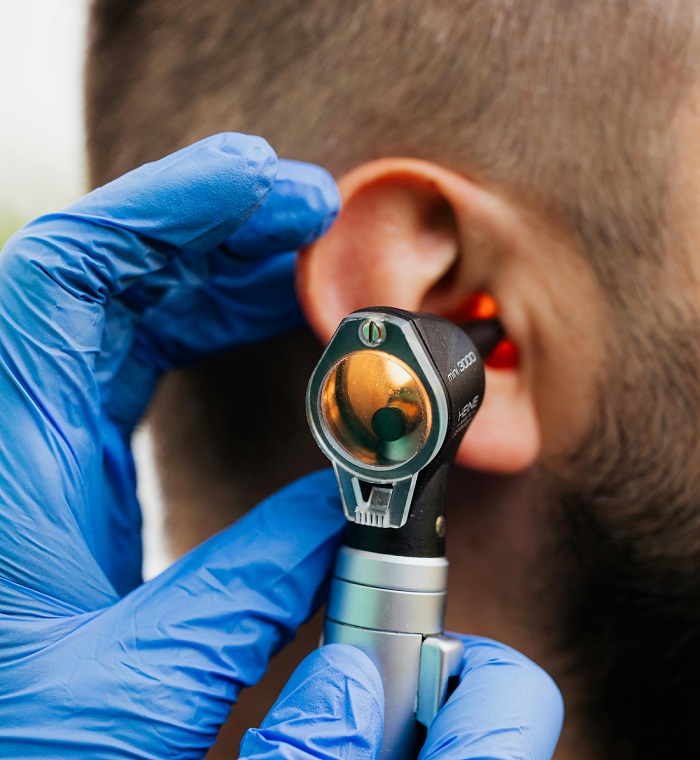
Audiometry (hearing test)
Cerumen removal (earwax cleaning)
Ear infection
Ear irrigation

Hearing assessment for children
Microscopic ear examination
Microsuction and ear toilet under a microscope
Microsuction of earwax and secretions
Specialist ENT ear examination

Specialist ENT nasal examination

Specialist ENT throat examination
Treatment of ear inflammation