Hearing assessment for children
 +381 64 4184 444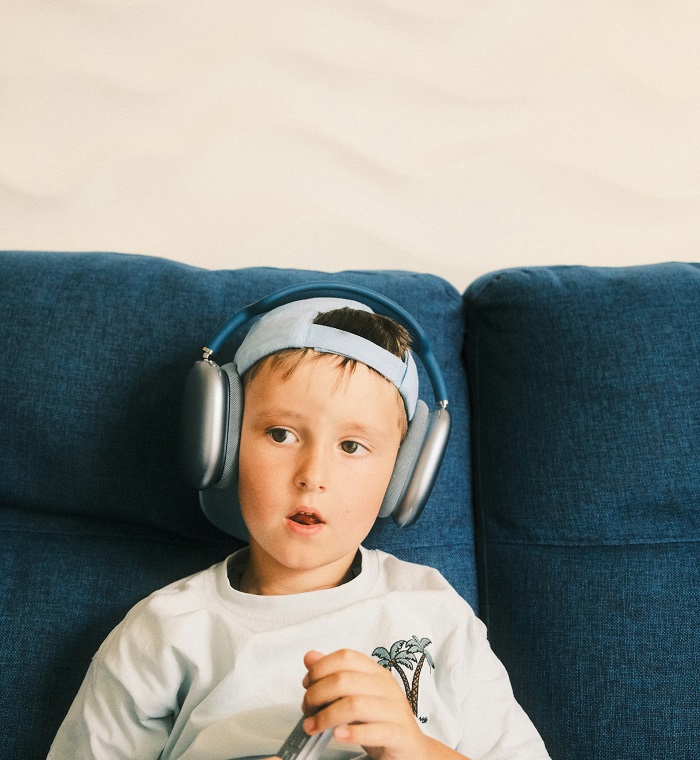
Hearing test for children is important for proper speech, attention, and learning development. Many parents miss early signs of hearing issues, which can lead to developmental delays. At Dr Prlja Medical in Belgrade, we perform detailed and non-invasive exams tailored to each age group. The test is quick and can provide answers essential to your child’s health. If you notice your child often doesn’t respond to sounds, asks you to repeat words, or is delayed in speech, there may be a problem. Call us today to book an appointment.
What causes hearing problems in children?
Hearing problems in children can have several causes. Some appear at birth, and the most common ones include:
- During early childhood, frequent middle ear inflammations are a leading cause of hearing loss. Repeated ear infections can lead to permanent damage.
- Loud environments and strong sound exposure can harm hearing if they last long. Head or ear injuries can also cause serious damage.
- Allergies, especially seasonal ones, may create ear pressure and affect hearing.
- A frequently blocked nose can clog the ear tube. This can lead to fluid buildup and temporary hearing loss.
When is the right time to conduct a hearing test for children?
Hearing tests in children can start in the first days of life. Newborns are routinely screened right after birth in the maternity ward. If the test wasn’t done then, it is advised to do it within the first month.
- You should test your baby’s hearing if they don’t react to sounds or babble by six months.
- If a child doesn’t say simple words by 18 months, a hearing test is necessary.
- For children with no symptoms, at least one ENT checkup is recommended before preschool or by age three.
- For preschoolers, a checkup is important before starting daycare or school.
Early ENT diagnosis supports development and helps avoid speech delays. Regular ENT monitoring gives peace of mind to both parents and child.
Pay attention to signs your child may have hearing problems
Sometimes, hearing issues in children aren’t obvious right away. Children react differently, so it’s important to observe their behavior in daily situations. If your child doesn’t respond when called from across the room, it may not be a lack of attention—they might not hear clearly. Some children ignore soft sounds but react strongly to sudden, loud noises. This can be a sign of partial hearing loss.
Children with hearing difficulties often:
- Look closely at your face while you speak
- Rely on lip movement and facial expressions to understand
- Seem withdrawn in group settings because they can’t follow conversations
- If they often give unrelated answers, ask you to repeat yourself, or ignore toy sounds, these are clear signals.
You can often detect the need for a hearing test through everyday interaction. If you have even a small doubt, it’s best to schedule an ENT ear exam. Our ENT team uses safe, reliable methods tailored to each age—even for babies who sleep during testing.

What does a hearing test for children look like?
A hearing test in children usually lasts between 15 and 30 minutes, depending on the child’s age and the methods used. The exam is never painful. All methods are non-invasive. The child may only feel soft tones or calm silence. When a baby is tested during sleep, the parent can stay close the entire time. This helps keep the baby calm and makes the process easier. Parental support matters—you comfort your child with a calm voice or gently soothe them if they wake up. This shared approach helps the exam go smoothly for both child and parent.
Most common hearing test methods in children:
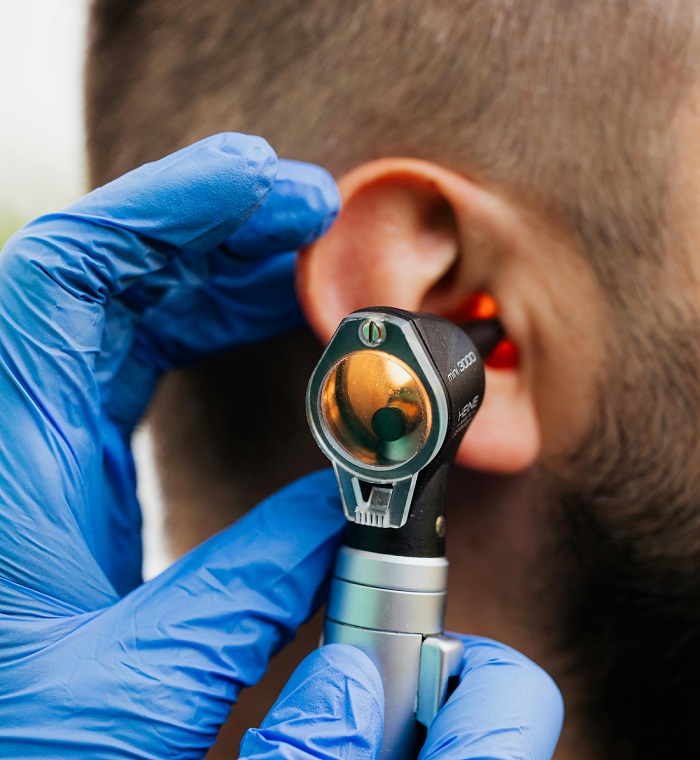
- Otoscopy – an ear exam with a special light; checks the eardrum and ear canal
- Tympanometry – measures eardrum movement and detects middle ear fluid
- Audiometry – tests the child’s hearing threshold for different tones; used for children who can cooperate
- OAE test – measures the cochlea’s response to sound; used for babies and toddlers
- ABR test – measures brain response to sound; used for newborns and children who don’t cooperate
How is hearing tested in babies?
Hearing exams in babies are usually done in the first months of life, often while the baby sleeps. The most common method for this age is the ABR test (auditory brainstem response). This procedure is completely painless and non-invasive.
- he baby doesn’t need to be awake or aware of the exam, which lowers stress and allows more accurate results.
- During the test, small adhesive electrodes are placed on the baby’s scalp to monitor brain responses to sound.
- At the same time, soft earphones are placed in the baby’s ears. These earphones produce gentle clicking sounds or tones.
- The device measures how quickly and accurately the brain detects sound, helping identify possible issues in the hearing pathway.
In some cases, the OAE test is also used. It measures the inner ear’s response—specifically the cochlea—to sound. This hearing test for babies lasts only a few seconds and can be done while the baby is calm. The exam is short, and parents stay present the entire time, offering comfort to the baby and reassurance to themselves.
What if there’s a problem?
If a child’s hearing test shows irregularities, the next step is further diagnostics. Depending on the findings, the doctor may suggest a CT or MRI scan, or a consultation with a speech therapist or audiologist. For temporary issues, such as fluid buildup or infections, treatment and follow-up are recommended.
In cases of permanent hearing loss, a long-term support plan is created. This may include hearing aids, speech therapy, and working with specialists in language development. Early rehabilitation helps the child build communication skills and overcome learning barriers. Our ENT team provides clear guidance and supports parents through every step. The goal is to give the child timely support and improve daily life quality.
What are conductive and sensorineural hearing losses?
Hearing loss in children is typically classified as conductive or sensorineural. The difference lies in the location of the problem and how it is treated.
Conductive hearing loss occurs when something blocks sound from passing through the outer or middle ear. Causes can include fluid in the middle ear, cerumen buildup, infections, or inflammation such as serous otitis. These are usually temporary and treatable with medication, cleaning, or simple procedures. Parents often notice reduced hearing during colds or allergies, and hearing returns after treatment.
Sensorineural hearing loss is more serious because it occurs in the inner ear, most often in the cochlea or on the auditory nerve. It is often permanent and can be congenital or acquired due to viral infections, noise exposure, or genetic factors. A child with this type of loss may hear sounds but not understand them clearly, especially in noisy environments.
Although this type of damage cannot be fully cured, there are effective support options. For mild to moderate hearing loss, hearing aids are used to amplify sounds and help the child better understand speech. For more severe cases, where hearing aids are not effective, a cochlear implant may be considered. This device directly stimulates the auditory nerve.
Call today and put your mind at ease – we can help clarify all concerns
Hearing test for children helps detect issues early that could affect speech, attention, and learning. Even mild hearing loss can seriously impact daily communication and education. That’s why it’s important to act early, without waiting for stronger symptoms. If you suspect your child may not hear well, it’s best to schedule a test as soon as possible. A quick response leads to faster diagnosis and better outcomes. At Dr Prlja Medical clinic in Belgrade, we use safe, reliable hearing tests suited to every age. Our team will guide you through the next steps and help your child get the right support. Call us today and schedule an exam. Early hearing assessment can make a big difference.
Achieve flawless results with personalized treatments that highlight your natural beauty.
Frequently Asked Questions and Answers
Can a child have hearing loss in just one ear?
Yes, a child can have hearing loss in only one ear. It often results from infections, congenital conditions, or injury. Even one-sided hearing loss can affect speech development and balance, so testing is important if there’s any concern.
How often should children have hearing tests?
For children without symptoms, a hearing check once a year is recommended during early childhood, especially if they’ve had ear infections before. Children with diagnosed hearing loss should be monitored more often, based on ENT or audiologist recommendations.
Can a cold temporarily affect hearing?
Yes. A cold can block the Eustachian tube, leading to fluid in the middle ear. This can cause temporary hearing loss. If it lasts more than two to three weeks, a hearing test is needed.
Can a child have mild hearing loss without it affecting speech?
Yes, but it's rare. Children with mild or one-sided hearing loss can develop speech normally, but they often struggle to understand speech in noisy settings. They may seem inattentive or face learning challenges.
Can children with hearing aids attend daycare or school without issues?
Yes. Most children with hearing aids integrate well into daycare or school. With proper support, speech therapy, and understanding from teachers, they communicate and learn like their peers.
Can children have normal hearing but still struggle to understand speech?
Yes. Some children have normal hearing test results but still struggle to process speech, especially in noisy places or when many people talk at once. This condition is called Auditory Processing Disorder (APD). In these cases, further evaluation by an audiologist and speech therapist can help develop listening and communication strategies.
Experiences of those who chose us
My experience with Sara was actually my first treatment ever. I had always been skeptical until I met her through a mutual friend. All it took was seeing her flawless skin to completely trust her. Not only does she maintain a natural look, which I really appreciate, with minimal corrections, but she’s also a wonderful friend and, when needed, a great therapist. I always leave her office feeling satisfied and smiling. P.S. She’s the only one who managed to solve my under-eye bags!
-Ksenija Knezevic
Singer
I met Sara a few years ago, and after the first treatment, I was certain – this woman knows what she's doing! I trust her completely, and I love her approach, honesty, and directness. There’s no exaggeration or unnatural looks – just a refreshed, rested, and natural appearance. We always have so much fun, laughing, while also enhancing our beauty. After seeing Sara, I look like I’ve just returned from the best vacation!
-Matea Milosavljevic
Actress
I have known Sara Prlja for more than 15 years, and I can say that everything she envisioned, she has achieved. She has always worked on herself, invested in her knowledge and growth. Her clinic is the perfect place where you will feel comfortable and relaxed, and the service is top-notch. I highly recommend her and her work!
-Aleksandar Dramicanin
Hair & Makeup Artist
Love, trust, and respect are the foundation of every strong and lasting relationship, whether personal or professional. From a medical perspective, we know how essential support is in any healing process, but for me, the relationship between a doctor and a patient is one where trust is especially important. I have complete trust in Sara and always feel confident that everything will be okay. That trust creates a sense of safety and allows real progress, while care and connection give us the space to grow together. I have never viewed my relationship with Sara as just professional, because every time I visit the clinic, it feels more like coming to people I trust and feel close to rather than simply working with a provider. That is the X factor that makes this experience truly valuable to me.

-Nataša Kovačević Njezvanova
Influencer
My experience with Sara has been exceptional in every way. Above all, she is a genuinely kind person and an outstanding professional. Together with her wonderful team, she creates an atmosphere free of fear, where trust comes naturally. I am delighted with the results and feel beautiful, confident, and happy. I wholeheartedly recommend her.

-Mahrina
Singer
I don’t easily trust anyone with my skin care, but the moment I stepped into Dr Prlja Medical, I felt safe and confident in my choice. I wouldn’t replace Sara for anyone else. She combines expertise, warmth, and a genuine love for her profession. Every treatment leaves me feeling refreshed and renewed, both physically and emotionally. Trust me when I say that you are in the right place.

-Anja Ćurčić
Actress