
Analysis of facial proportions before treatment – what to know before deciding
 +381 64 4184 444
The analysis of facial proportions before treatment before treatment opens the door to a clearer understanding of one’s features and their mutual balance. People often notice small changes in their face. However, most are unsure whether these changes are part of their natural structure or a sign that the relationship between certain areas has been disrupted. Therefore, it is useful to view the facial lines through the gentle light of professional assessment. This approach helps maintain a natural appearance and prevent corrections that could alter what already works well. When the analysis is skipped, decisions may be made quickly and based solely on immediate impressions. This sometimes leads to results that don’t align with personal traits. Proportions are not the same for everyone. It is important to understand that every face has its own rhythm and balance, which deserves careful attention.
What does the initial facial assessment look like in practice?
During the first meeting, the facial assessment begins with careful observation of:
- symmetry
- eye positioning
- nose positioning
- lip positioning
- chin line
The specialist in aesthetic surgery first analyzes the proportions in relation to the natural thirds of the face – the upper, middle, and lower zones – to determine the uniformity of volume and skin tone. This assessment takes a short time. It usually takes from twenty to thirty minutes, and is performed without any pain as it does not include invasive procedures. During this period, the doctor uses light, a mirror, sometimes digital software, and light measuring tools that allow precise tracking of lines and relationships between the regions of the face.
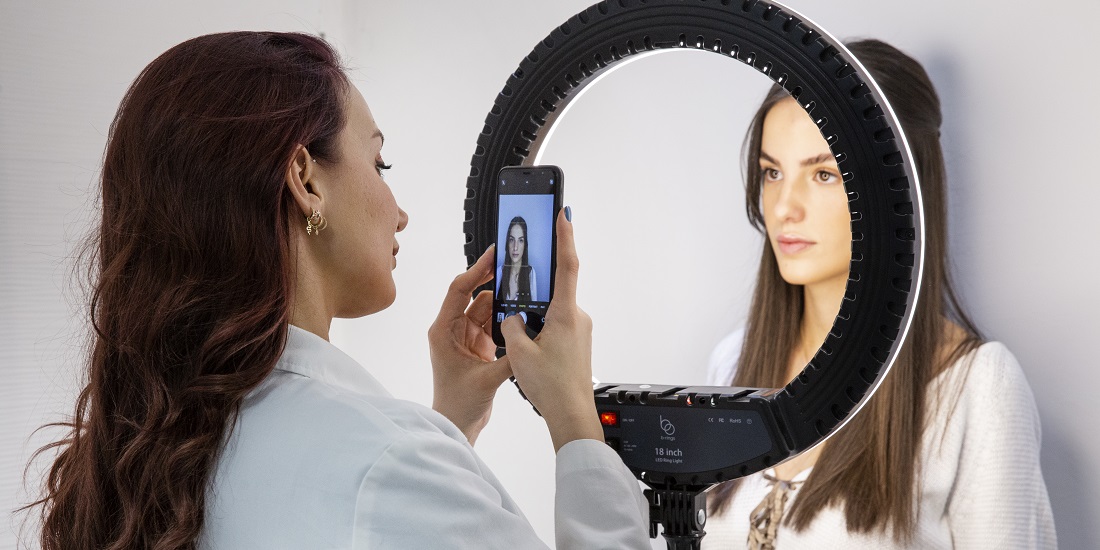
The analysis is recommended before any aesthetic treatment as it reveals previous irregularities, including asymmetries caused by earlier interventions. During the conversation, the specialist asks simple questions about desires and habits to ensure the plan is tailored to the actual needs of the skin and natural proportions
Online analysis of proportions – how the assessment works through photographs
Online facial proportions analysis has become a convenient way to get a professional evaluation before facial treatment, without needing to visit the clinic. The assessment is done by reviewing photographs taken from three angles – frontal, semi-profile, and side. Based on these, the doctor evaluates the balance between the forehead, nose, cheeks, and chin. To ensure accurate results, the images should be sent without makeup and in natural daylight, as reflections can alter the relationship between shadows and contours.
Special software helps the doctor measure the proportions and notice small differences that often go unnoticed by the naked eye. People who have undergone this type of assessment often emphasize that the analysis through images helped them understand which changes are realistic and which procedures should be considered only after a personal consultation. In more complex cases, an in-person evaluation remains irreplaceable for precise planning of corrections.
The key proportions that determine the natural appearance of the face
When assessing the proportions of the face, the expert relies on basic relationships that define a harmonious appearance. The face is observed through three thirds:
- from the hairline to the eyebrows
- from the eyebrows to the bottom of the nose
- from the nose to the chin
When these zones are approximately equal, the face appears balanced, but small differences are natural and often contribute to recognizability. The profile plays a special role, as it shows the relationship between the nose, lips, and chin, which is known as facial projection. The width of the lower third of the face and the position of the chin also affect the impression of strength or softness of the features. In the assessment before facial treatment for men, the angles of the face, which are more pronounced, and the jawline, which is more defined, are observed. For women, the transition is softer, and the shapes are rounder.

Disproportions can be congenital or acquired, especially after volume loss with age. People who assess their own faces often make mistakes because they only view one angle, while the true balance becomes visible only when considering all regions as a whole.
Analysis of facial proportions before treatment and its impact on procedure planning
The analysis of facial proportions before treatment plays a crucial role in selecting the appropriate procedure and the amount of material needed. Based on the relationship between the cheeks, under-eye area, chin, jawline, and lips, the doctor can precisely determine which areas require volume and which only need subtle contour enhancement. This approach prevents the use of excessive hyaluronic acid and maintains the natural mobility of the facial muscles, contributing to a harmonious and balanced appearance.
When planning the treatment, a combination of manual analysis and digital 3D software is used, allowing the simulation of results, so the patient can clearly see the expected changes. This reduces the risk of an unnatural effect and increases the predictability of the results’ longevity. When the proportions are correctly calculated, hyaluronic fillers are distributed in the exact layers of the skin where they can restore structure without creating irregularities or pressure on surrounding tissues.
Factors that affect facial proportions
Facial proportions undergo natural changes over the years as a result of biological processes in the skin and subcutaneous tissues. Stable proportions are those that remain similar regardless of weight fluctuations, while variable proportions refer to parts of the face that respond more quickly to aging or lifestyle changes.
- The loss of collagen and elastin leads to a decrease in elasticity, causing a slight sagging of contours and a change in the relationship between the upper and lower thirds of the face.
- For people who sleep on one side or do not consume enough fluids, symmetry can become more noticeably disrupted, as dehydration affects the tone of the skin and muscles.
- Facial muscles also play an important role, as facial myokymia – excessive contraction of certain muscle groups, such as the chewing or frontal muscles – can alter the shape of the jaw or forehead.
A specialist often recommends preventive treatments and exercises to maintain muscle tone before suggesting corrections with fillers or other procedures.
Do treatments change proportions, and when is correction the best option?
Aesthetic treatments can significantly affect facial proportions, especially when applied to areas that shape its structure. Cheek and jaw fillers often improve proportions by restoring volume that naturally decreases with age, while lip and chin fillers can correct the relationship between the lower and middle thirds of the face. However, excessive amounts of material can disrupt balance, so careful planning is crucial. Pre-treatment analysis helps determine whether the face needs additional volume, better contour, or just subtle correction.
For individuals who have previously undergone aesthetic treatments, the doctor first evaluates the condition of the tissue and the presence of residual material. Sometimes, previous fillers need to be partially dissolved before a new procedure. A common example is the relationship between the nose and chin, where proper analysis before the facial treatment prevents the chin from appearing too prominent or recessed in relation to the profile.

How to prepare for the analysis and consultation
Preparing for the facial proportions analysis begins with simple but important steps. Before arriving for the consultation, it is recommended that the face be completely clean, without makeup or creams. That way, the skin can be observed in its natural state. Daylight or a well-lit space helps the doctor notice the skin tone, elasticity, and small asymmetries. It is helpful to bring previous photos or documentation about past treatments. When reviewed, your doctor will be able to assess any impact on the current appearance. During the conversation, it is important to honestly describe your habits and clearly state your goal – whether you want:
- a subtle refreshed look
- contour enhancement
- correction of a specific facial area
Realistic expectations are based on bone structure, skin quality, and how the muscles respond. Once all of this is considered, the expert can accurately explain what is achievable and what might appear unnatural. This preparation makes the process easier and provides the foundation for a safe and accurate correction plan.
Adopt a long-term approach to skin health and proportions
Analysis of facial proportions before treatment provides the foundation for thoughtful decisions and natural results. When the face is considered as a whole rather than in individual parts, long-lasting harmony can be achieved. Appearance depends not only on aesthetic procedures but also on healthy daily habits. A balanced diet, adequate sleep, and regular hydration help the skin maintain elasticity and tone. On the other hand, occasional check-ups with a specialist help maintain the stability of the achieved look. Maintaining proportions means not only preserving the external shape but also supporting the natural functions of muscles and skin. When approached carefully, each correction becomes part of a long-term care plan. This way, the face remains harmonious, and the appearance is refreshed and true to the personal features that make it unique.