Vestibulometry
 +381 64 4184 444
Dizziness and loss of balance disrupt daily activities. These symptoms may indicate problems with the inner ear. If you often feel unstable or nauseous, it is time to take action. At Dr Prlja Medical Clinic in Belgrade, vestibulometry can help you find the cause of your discomfort. This diagnostic method provides accurate results and does not require a long recovery. Our team of experts uses modern equipment and offers careful attention to each patient. Schedule an examination and discover what is happening with your body. Contact us to learn how the examination works and what to expect next.
What is vestibulometry and how can it help you?
Vestibulometry is an examination that assesses the function of the ear’s balance system. This system is located in the inner ear and plays a key role in maintaining body stability. When there is a disorder in the vestibular apparatus, a person may feel dizziness, unsteady walking, or nausea.

Vestibulometry examination is recommended when repeated episodes of dizziness, fainting, or a feeling of instability occur. Also, symptoms such as sudden loss of balance or the sensation that the space around you is spinning may indicate a more serious problem. Vestibulometry helps doctors accurately determine the cause and suggest appropriate therapy to treat vertigo.
A timely examination can greatly improve quality of life. At Dr. Prlja Medical Clinic, our ENT team of experts uses modern testing methods during ENT examinations, combining accuracy with a careful and gentle approach to each patient.
What conditions can vestibulometry diagnose?
Vestibulometry examination accurately shows how your vestibular system functions. These tests measure eye movements, the ear’s response to various stimuli, and the body’s balance response. During the exam, visual and thermal stimuli are used, as well as tests involving changes in head position. Based on your body’s reactions, the doctor can precisely determine the type of disorder.
The most common conditions diagnosed by this exam:
- Benign paroxysmal positional vertigo (BPPV): Detected during head movement tests when specific eye movements (nystagmus) occur. This condition happens when tiny crystals in the inner ear shift and enter the semicircular canals, disrupting balance signals.
- Meniere’s disease: Vestibular tests show asymmetry in function between the left and right ear. Patients often feel unstable during the caloric test.
- Vestibular neuritis: Revealed by a reduced vestibular response on one side of the ear to thermal stimuli. Reactions are compared to identify inflammation of the vestibular nerve.
- Vestibular migraines: Symptoms often appear without obvious peripheral dysfunction. Testing can show temporarily reduced sensitivity and balance disorders.
- Central nervous system disorders: Vestibulometry detects irregularities in coordination of eye and body movements not typical for inner ear disorders..
These tests are non-invasive, safe, and provide the doctor with clear insight into the cause of symptoms. At Dr. Prlja Medical, our experienced team performs the exams with a gentle and secure approach.

What does the vestibulometry examination look like at Dr Prlja Medical?
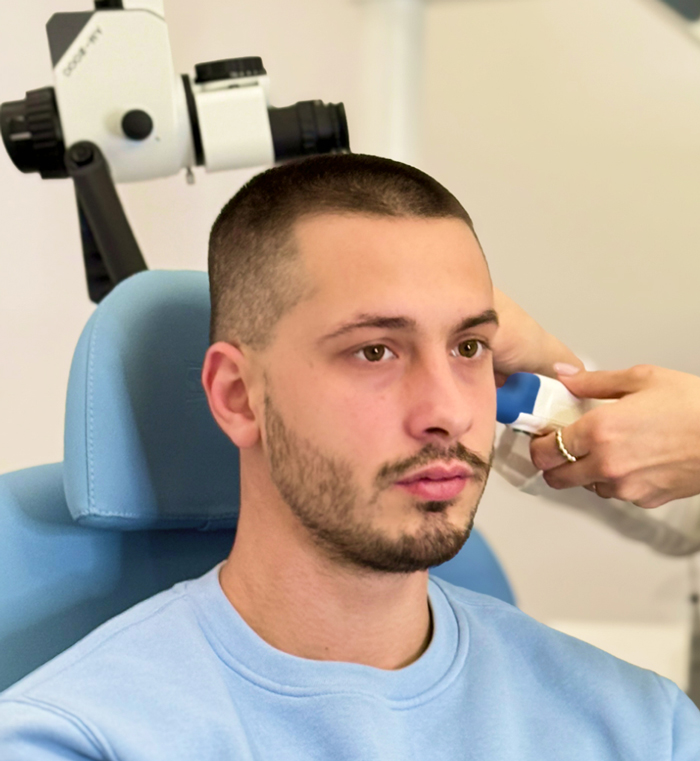
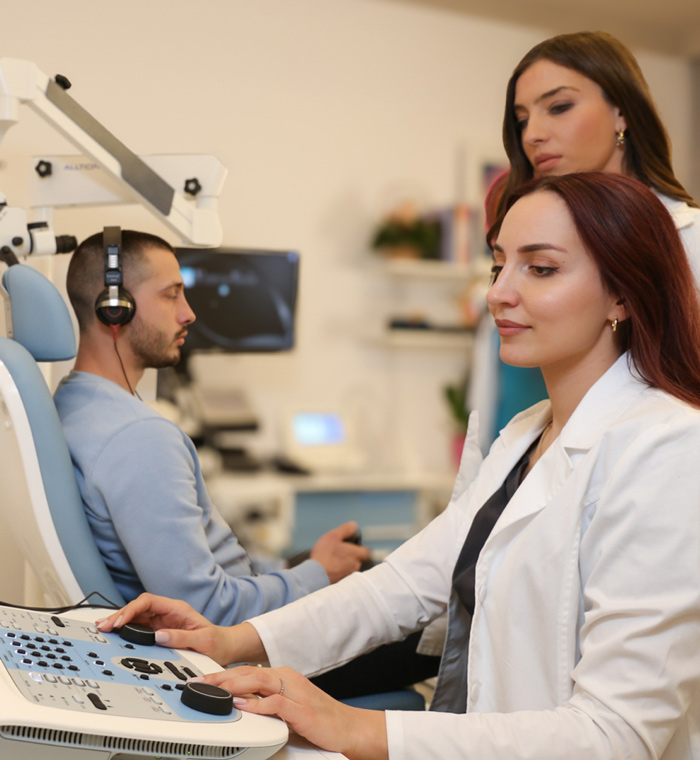
The examination involves a series of functional tests that assess the function of the inner ear and balance system. The exam is non-invasive, safe, and does not use any form of radiation. In most cases, patients do not feel discomfort, except for possible mild dizziness during some tests.
The examination process includes:
- Medical history and clinical examination: a conversation with the doctor and a basic ENT exam.
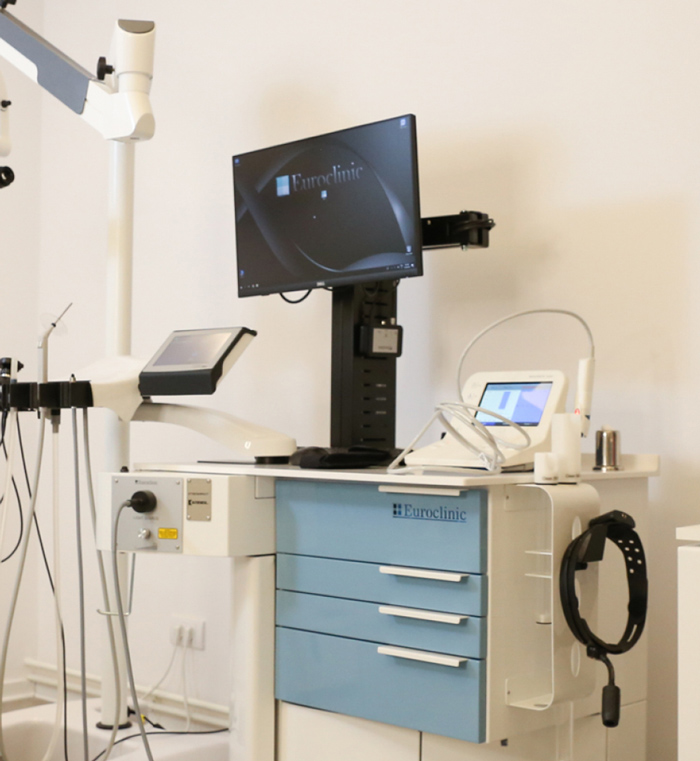
- VNG (video nystagmography): analysis of eye movements using a camera to detect involuntary eye movements (nystagmus).
- Caloric ENT test: stimulation of the vestibular system with warm and cold water or air to examine the function of the semicircular canals.
- Positional tests (Dix-Hallpike, supination): checking positional causes of dizziness, especially when BPPV is suspected.
- Posturography and balance tests: assessment of body stability under various conditions, if part of the protocol.
How to prepare for the vestibulometry examination
Preparation for the vestibulometry exam is simple but very important for accurate results. In the comfortable setting of Dr Prlja Medical Clinic, our ENT specialists will inform you about all steps in advance, but here are basic guidelines to know:
- Avoid food and drink 3 to 4 hours before the exam. An empty stomach helps reduce nausea during the caloric test.
- Do not take dizziness or calming medications (e.g., Betaserc, diazepam) 48 hours before the exam, unless your doctor advises otherwise.
- Do not wear eye makeup. Eye movements are tracked with a camera, so a clean face is important for accurate measurement.
- Inform your doctor about all medications you are taking. This includes supplements or herbal products.
- If you have symptoms such as severe dizziness or fainting, it is recommended to come with someone to accompany you.
At Dr. Prlja Medical Clinic, you will always receive clear instructions and support. Our goal is to help you feel safe and informed throughout the entire process.
Why choose Dr Prlja Medical?
At Dr. Prlja Medical, you get more than a standard ENT exam. Our team of specialists combines expert knowledge with many years of experience in vestibular diagnostics. Each patient receives a personalized approach—with detailed medical history, an individual plan, and clear recommendations.
Besides expertise, our team stands out for a careful and gentle attitude toward patients. We understand how unpleasant dizziness and instability can be. That is why we conduct examinations in a comfortable environment, without waiting or stress. We use the latest medical equipment to quickly and accurately identify the cause of symptoms. Results are available immediately after the exam, along with professional interpretation and support.
Whether you have clear symptoms or suspect a problem, our team is ready to assist you with knowledge and understanding that bring confidence.
What to expect after the examination?
After completing the vestibulometry examination at Dr. Prlja Medical, you will receive:
- Clear explanation of results and diagnosis: The doctor interprets the findings immediately and gives you an overview of your condition.
- Recommendations for further steps or therapy: If a condition is diagnosed, an individual treatment plan is proposed.
- Referral for additional specialist exams: Depending on the findings, the patient may be referred for further diagnostics with a neurologist or otoneurologist.
- Follow-up examination to monitor progress: In agreement with the doctor, a new evaluation is scheduled after therapy.
Our team remains available for any additional questions to help you feel informed and secure. i sigurno.
When should you visit an ENT doctor and schedule vestibulometry
Vestibular problems can affect your daily life, confidence, and safety while moving. When dizziness or instability occurs, it is important not to ignore the symptoms. Timely diagnosis helps accurately find the cause and prevent complications. Vestibulometry at Dr Prlja Medical Clinic is the first step toward better understanding your condition. Our team combines expertise and care to provide clear answers and concrete guidance. Schedule an examination today and take the first step toward a more stable daily life. Feel secure with the support of an expert team that knows how to help you.
Achieve flawless results with personalized treatments that highlight your natural beauty.
Često postavljana pitanja i odgovori
How often should vestibulometry be performed?
Vestibulometry is usually done when symptoms like dizziness or loss of balance occur. If the condition changes or new therapy starts, the doctor may recommend repeating the test.
Can I resume daily activities immediately after the exam?
Most patients can return to daily activities right away. However, some may experience brief dizziness, so it is advised not to drive immediately after the test.
Does vestibulometry detect the cause of ringing in the ears?
Vestibulometry does not directly diagnose ringing (tinnitus), but it can help identify inner ear disorders sometimes associated with it, such as Meniere’s disease.
Can the test cause vertigo?
Yes, some tests (e.g., caloric or positional tests) may cause mild and short-term dizziness, which is expected and useful for diagnosis.
Should I stop taking medications before the exam?
Your doctor will advise you about medications. Usually, it is recommended not to take dizziness medications (like Betaserc or sedatives) 48 hours before the exam unless told otherwise.
Is vestibulometry performed on children?
Yes, but only if the child can cooperate during the exam. A prior specialist assessment is needed to determine if the exam suits the child’s age.
How is the caloric test performed?
The caloric test involves stimulating the ear with warm and cold water or air. This stimulation causes eye movements that are monitored to assess the vestibular system function.
Why are eye movements monitored during the caloric test?
Eye movements (nystagmus) show how the vestibular system responds to stimulation. By analyzing these movements, the doctor can identify asymmetries or dysfunction in the inner ear.
Experiences of those who chose us
My experience with Sara was actually my first treatment ever. I had always been skeptical until I met her through a mutual friend. All it took was seeing her flawless skin to completely trust her. Not only does she maintain a natural look, which I really appreciate, with minimal corrections, but she’s also a wonderful friend and, when needed, a great therapist. I always leave her office feeling satisfied and smiling. P.S. She’s the only one who managed to solve my under-eye bags!

-Ksenija Knezevic
Singer
I met Sara a few years ago, and after the first treatment, I was certain – this woman knows what she's doing! I trust her completely, and I love her approach, honesty, and directness. There’s no exaggeration or unnatural looks – just a refreshed, rested, and natural appearance. We always have so much fun, laughing, while also enhancing our beauty. After seeing Sara, I look like I’ve just returned from the best vacation!

-Matea Milosavljevic
Actress
I have known Sara Prlja for more than 15 years, and I can say that everything she envisioned, she has achieved. She has always worked on herself, invested in her knowledge and growth. Her clinic is the perfect place where you will feel comfortable and relaxed, and the service is top-notch. I highly recommend her and her work!

-Aleksandar Dramicanin
Hair & Makeup Artist
Love, trust, and respect are the foundation of every strong and lasting relationship, whether personal or professional. From a medical perspective, we know how essential support is in any healing process, but for me, the relationship between a doctor and a patient is one where trust is especially important. I have complete trust in Sara and always feel confident that everything will be okay. That trust creates a sense of safety and allows real progress, while care and connection give us the space to grow together. I have never viewed my relationship with Sara as just professional, because every time I visit the clinic, it feels more like coming to people I trust and feel close to rather than simply working with a provider. That is the X factor that makes this experience truly valuable to me.

-Nataša Kovačević Njezvanova
Influencer
My experience with Sara has been exceptional in every way. Above all, she is a genuinely kind person and an outstanding professional. Together with her wonderful team, she creates an atmosphere free of fear, where trust comes naturally. I am delighted with the results and feel beautiful, confident, and happy. I wholeheartedly recommend her.

-Mahrina
Singer
I don’t easily trust anyone with my skin care, but the moment I stepped into Dr Prlja Medical, I felt safe and confident in my choice. I wouldn’t replace Sara for anyone else. She combines expertise, warmth, and a genuine love for her profession. Every treatment leaves me feeling refreshed and renewed, both physically and emotionally. Trust me when I say that you are in the right place.

-Anja Ćurčić
Actress