
Skin during menopause: Changes, challenges, and solutions
 +381 64 4184 444
Skin is often the first to reveal what the body is quietly going through from within. As women enter menopause, many notice that their face no longer looks the same – the skin becomes thinner, drier, and less elastic. Skin during menopause undergoes changes that can be sudden, but they are not insurmountable. However, this does not mean the end of well-maintained and glowing skin. With the right habits, quality products, and modern treatments, you can preserve a youthful appearance and feel confident in your skin. Find out how our anti-age center – Dr Prlja Medical in Belgrade can help you keep your skin nourished, healthy, and beautiful.
Hormonal changes and skin during menopause
During menopause, estrogen levels drop sharply – and this directly affects the appearance and health of the skin. Estrogen is important for the production of collagen, elastin, and hyaluronic acid, which are crucial for the firmness, elasticity, and hydration of the skin. When it is in lower levels, the skin becomes thinner, drier, and more sensitive.
Without enough estrogen, the skin loses its ability to retain moisture, leading to a feeling of tightness, flakiness, and dryness. At the same time, the production of sebum, the natural oil that protects the skin, decreases. The result is increased wrinkles, less elastic skin, and more pronounced lines.
Although these changes are natural, they are not something you simply have to accept. There are ways to mitigate their effects and provide the skin with the support it needs most right now.

The most common skin issues during menopause
Some issues develop gradually, while others appear suddenly. It is important to recognize them early so that you can adjust your skincare routine to meet the new needs of your skin. The most common problems are:
- Dry skin and dehydration
- Loss of elasticity and the appearance of wrinkles
- Pigmentation changes and sensitivity
- Other aesthetic challenges
Dry skin and dehydration
The decreased production of estrogen affects the moisture levels in the skin. Sebum is produced in smaller amounts, making it harder for the skin during menopause to retain water. As a result, flakiness, a feeling of tightness, and pronounced dryness are common. The skin now requires richer hydration and gentle, soothing care.
Loss of elasticity and the appearance of wrinkles
A lack of collagen and elastin leads to sagging skin and deeper wrinkles, especially around the eyes, mouth, and neck. The face may appear tired, and the contours become less defined. This is the moment when introducing products and treatments that stimulate regeneration is more important than ever.
Pigmentation changes and sensitivity
Hormonal imbalances can lead to the appearance of dark spots on the skin, especially on the cheeks, forehead, and décolletage. Skin during menopause also becomes more sensitive to the sun, irritation, and allergies. It requires carefully selected protection and care without harsh ingredients.
Other aesthetic challenges
Menopause can also affect the appearance of fine capillaries, enlarged pores, loss of radiance, and uneven skin tone. All of these changes impact the overall appearance of the face, but they can be effectively minimized with proper care and treatments.
Tips for daily skincare during menopause
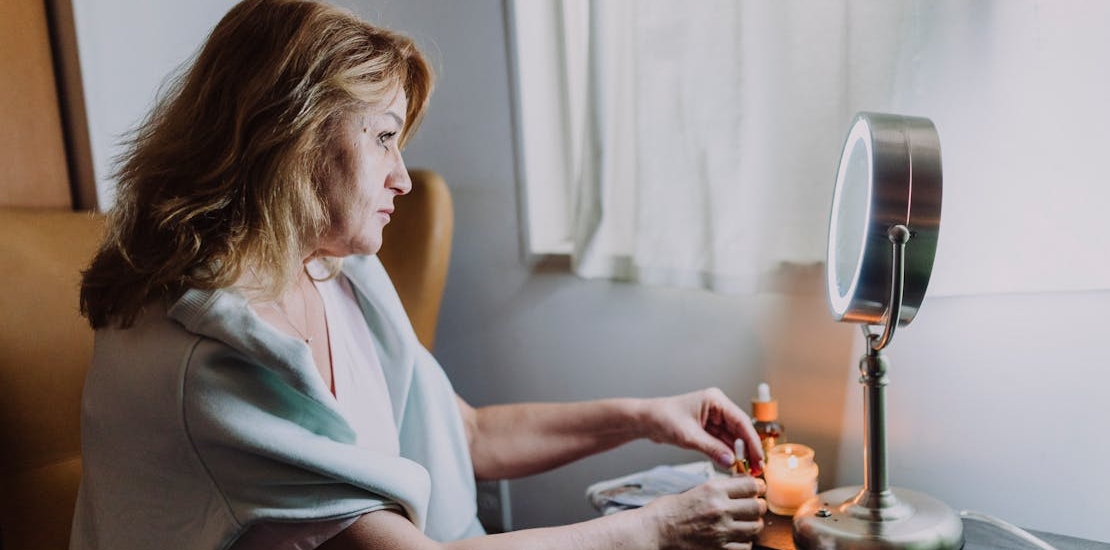
Skin during menopause requires a bit more attention and care. You don’t need a complicated routine – just a few consistent steps that address the current needs of your skin. Here’s how to achieve that:
- Choose gentle cleansers. Skin during menopause is more prone to dryness. Use mild, creamy, or oil-based cleansers that don’t disrupt the natural protective barrier and don’t leave the face feeling tight after washing.
- Add a hydrating serum. Serums with hyaluronic acid and peptides help the skin retain moisture and maintain a fresher appearance. Apply it before your cream, preferably while the skin is still slightly damp.
- Use a rich cream. The cream should nourish and protect. Choose formulas with ceramides, squalane, or natural oils that nourish the skin and prevent moisture loss.
- Don’t skip SPF. Sun protection is important every day – even in winter. UV rays accelerate aging and worsen pigmentation. A daily cream with SPF 30 (or higher) is essential.
- Don’t forget your neck and décolletage. These areas of skin undergo the same changes. Extend your skincare routine to them – your skin will thank you.
Recommended treatments and cosmetic procedures
In addition to regular at-home care, skin during menopause often requires extra support. Modern treatments can significantly improve skin tone and restore freshness, especially when it comes to reducing wrinkles around the lips and neck. Some treatments are gentle and can be done at home, while professional procedures provide deeper and longer-lasting effects.
- Introduce at-home treatments with active ingredients. Use serums and creams with retinol, peptides, vitamin C, and niacinamide. These ingredients stimulate skin renewal, improve texture, and even out skin tone.
- Consider skin booster treatments. Skin boosters are mesotherapy cocktails that deeply hydrate the skin and improve its quality. They are suitable for the face, neck, and décolletage, and results are visible after just a few treatments.
- Try the CO2 fractional laser. This method stimulates skin regeneration by creating microscopic points in the dermis, which triggers new collagen production. The CO2 laser treatment is ideal for wrinkles, scars, and sagging skin.
- Use collagen stimulators. Products containing poly-L-lactic acid or calcium hydroxyapatite stimulate the skin to produce new collagen on its own. The effects are gradual but long-lasting.
- Combine treatments for better results. Consult with a dermatologist or cosmetologist to create a treatment plan that suits your skin type and desired outcomes.
The role of diet and supplementation
Skin health doesn’t depend solely on what we apply to our face – it largely comes from within. During menopause, the body undergoes changes that also affect the appearance of the skin. Proper nutrition and carefully selected supplements can help keep the skin hydrated, elastic, and resilient to external factors.
It is important to consume enough healthy fats, particularly those from nuts, olive oil, and fatty fish. These fats help the skin retain moisture and reduce the feeling of dryness. Proteins are also essential as they stimulate collagen production – crucial for skin firmness and tone. Fruits and vegetables rich in antioxidants help fight free radicals, which accelerate aging.
Supplementation can be beneficial, especially when your diet doesn’t provide everything you need. Collagen powder, omega-3 fatty acids, vitamins C, E, and D, as well as zinc and selenium, are often recommended for women in menopause as they support the health of the skin, hair, and nails. Before adding supplements to your routine, it’s a good idea to consult with a doctor or pharmacist to choose what you truly need.

Prevention and long-term maintenance of skin health during menopause
To keep skin healthy during menopause, it is important to think preventively. Skin that is regularly nourished, protected, and cared for retains elasticity, radiance, and an even tone for longer. Prevention starts with a consistent daily routine that includes gentle cleansing, deep hydration, and regular sun protection. Sun exposure is one of the main causes of accelerated skin aging, so using SPF year-round is a habit that makes a big difference.
In addition to basic care, it is important to monitor the condition of your skin and address changes promptly. Don’t forget to regularly replenish your skin barrier with richer creams and serums, especially during colder months when the skin loses more moisture.
How skin appears during menopause is also influenced by lifestyle. Sufficient sleep, stress reduction, physical activity, and a healthy diet directly affect the tone, freshness, and resilience of the skin.
Start a new skincare routine. Your skin deserves it!
Menopause brings changes that can seem unpredictable. This is why skin during menopause requires special care. With a little attention, good habits, and modern treatments, you can feel beautiful, confident, and satisfied. Not every wrinkle has to be a cause for concern. The important thing is to know that you deserve care that feels right and helps you look at yourself in the mirror with a smile every day. Self-care has never been more important – and it’s never too late to start.