
Nosebleed treatment
 +381 64 4184 444
Nosebleed treatment at Dr Prlja Medical in Belgrade is designed to provide patients with prompt and professional care, ensuring complete safety and comfort. A nosebleed can be unpleasant and worrying, especially when it occurs suddenly or happens often. At our clinic, we approach each case with care, aiming to identify the cause, provide effective treatment, and reduce the risk of recurrence. Our experienced team is committed to delivering personalized care with maximum comfort during examinations and therapy. Do not postpone your check-up, as a nosebleed can be a sign of a more serious health condition. Call us today to receive timely and professional treatment.

Nosebleeds: When do they require professional evaluation?
If you experience frequent, unexpected, or heavy nosebleeds, our team can provide the right support. Bleeding accompanied by weakness or a rapid pulse is a clear sign that medical consultation is needed.
If basic first aid — such as properly pinching the nostrils while sitting and slightly leaning the head forward — does not stop the bleeding within 10–15 minutes, you should see a specialist. These symptoms often indicate a more serious issue that requires professional ENT diagnosis and targeted treatment.
Diagnosis before starting therapy
Before beginning treatment, our team conducts a detailed examination to accurately determine the cause of the bleeding.
- The first step is a conversation with the patient about symptoms, frequency, and circumstances of the bleeding, which helps identify possible triggers.
- This is followed by an ENT nasal examination using a frontal reflector to clearly detect changes such as:
- enlarged blood vessels
- inflammation of the nasal mucosa
- nasal polyps
- small injuries
- If needed, we perform an endoscopic examination of the nose, which provides a detailed view of deeper structures and reveals hidden bleeding sources.
- If the source is not clearly visible or the bleeding is heavy, anterior nasal packing is applied to stop it, followed by planning targeted treatment.
- Blood pressure measurement is mandatory, as elevated values can contribute to repeated episodes.
- The doctor may recommend laboratory tests, including a complete blood count and coagulation profile, to check for clotting disorders.
We advise patients to bring their previous medical records and a list of current medications, which speeds up the assessment and enables more accurate treatment planning.

What does nosebleed treatment involve
At our clinic, the approach to treating nosebleeds is always carefully tailored to the specific cause and the patient’s condition. Commonly used methods include:
- chemical cauterization — gentle sealing of blood vessels with a chemical agent
- modern electrotherapy, which stops bleeding through precise heat application
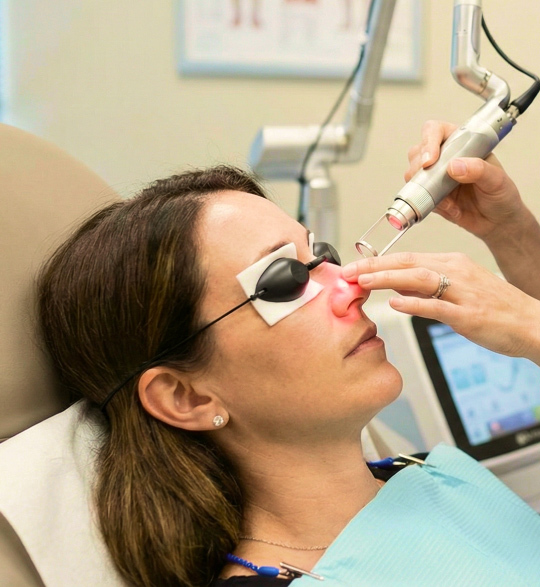
At the same time, blood pressure is checked and regulated, as its fluctuations often contribute to nosebleeds. If the nasal mucosa is dry, we recommend targeted solutions for moisturizing and recovery. For patients with clotting disorders, special absorbable materials such as Gelfoam or collagen absorbable tampons are used, which stop bleeding and dissolve on their own without the need for removal. In selected cases, especially with severe or chronic epistaxis, laser therapy may be applied, offering high precision and minimal damage to surrounding tissue.
These procedures are usually brief, lasting an average of 10 to 20 minutes, including preparation. Thanks to local anesthesia in spray or gel form, pain is minimal, and most patients report only mild discomfort or short-term stinging. Recovery is quick, and patients typically return to daily activities the same day, with a clear care plan and follow-up consultations.
Benefits of timely therapy
Timely treatment of nosebleeds allows symptoms to stop quickly, preventing unnecessary prolongation of discomfort and reducing the stress bleeding can cause. Acting early greatly lowers the risk of significant blood loss, avoiding complications such as:
- Anemia – a condition in which the body lacks enough red blood cells due to blood loss, which can lead to fatigue, weakness, and reduced functioning.
- Low blood pressure – heavy blood loss can rapidly reduce circulating fluid volume, lowering blood pressure and causing weakness or fainting.
- Vertigo – reduced oxygen supply to the brain due to blood loss can cause unsteadiness or disorientation.
- Syncope – temporary loss of consciousness when the brain does not receive enough oxygen and nutrients, often due to a sudden drop in blood pressure.
- Hypoxia – reduced oxygen levels in the blood, particularly dangerous if blood enters the airways and makes breathing difficult.
- Clotting disorders – during prolonged bleeding, the body uses up clotting factors, which can disrupt normal coagulation and prolong bleeding.
Timely treatment also prevents damage to the nasal mucosa that can occur from repeated or prolonged bleeding, preserving its natural moisturizing function and defense against infections. By identifying and addressing the cause early, the likelihood of the problem recurring is reduced.
Next steps after nosebleed treatment
After nosebleed treatment, our ENT team usually schedules a follow-up appointment within a few days to a week, depending on the treatment method and the patient’s individual condition. At home, it is important to follow the doctor’s instructions — avoid intense physical activity, do not blow your nose forcefully, and be mindful of exposure to dry or overly warm air. If bleeding recurs, or if there is increased discomfort, swelling, fever, or difficulty breathing, you should contact the clinic immediately.

To reduce the risk of recurrent bleeding in the long term, it is recommended to:
- maintain optimal indoor air humidity (ideally 40–60%)
- regularly monitor blood pressure
- avoid habits that irritate the nasal mucosa, such as frequent touching or aggressive cleaning of the nose
- use nasal moisturizing products based on saline or seawater to aid recovery and strengthen natural defenses
Book an appointment at Dr Prlja Medical
At Dr Prlja Medical in Belgrade, we understand how important it is to treat nosebleeds promptly. Nosebleed treatment at our clinic begins with a thorough examination to determine the cause and choose the method best suited to you. We ensure each appointment is calm and unhurried, explaining every step so you feel safe. Our clinic offers a peaceful environment and full support from start to finish. If bleeding occurs more often than before or lasts longer than it should, it’s best to see a specialist as soon as possible. Call us to schedule your appointment and receive expert care without unnecessary waiting. Our goal is to help you return to daily activities free of discomfort and worry.
Achieve flawless results with personalized treatments that highlight your natural beauty.
Frequently asked questions and answers
Can nosebleed treatment affect my sense of smell?
In most cases, there is no permanent loss of smell. A temporary mild reduction may occur after procedures involving blood vessel cauterization, but it usually resolves within a few days.
Can I eat and drink right after treatment?
You can drink water and eat light food once the anesthesia wears off, usually after 30–60 minutes. It is recommended to avoid very hot or spicy food on the same day.
Can I use painkillers after treatment?
Mild painkillers like paracetamol are allowed. Avoid aspirin and nonsteroidal anti-inflammatory drugs, as they may increase the risk of recurrent bleeding.
Can nosebleed treatment affect my physical activity in the long term?
No. After a short rest period (usually 2–3 days), most patients can return to their regular activities without restrictions.
Can nosebleeds be related to allergies?
Yes. Allergic rhinitis can lead to frequent nose rubbing and mucosal irritation, increasing the likelihood of bleeding.
Is the treatment safe for children and elderly patients?
Yes. Nosebleed treatment is adapted to the patient’s age, health condition, and the cause of bleeding, with special attention for children and elderly patients to ensure the best outcome with maximum safety.
Experiences of those who chose us
My experience with Sara was actually my first treatment ever. I had always been skeptical until I met her through a mutual friend. All it took was seeing her flawless skin to completely trust her. Not only does she maintain a natural look, which I really appreciate, with minimal corrections, but she’s also a wonderful friend and, when needed, a great therapist. I always leave her office feeling satisfied and smiling. P.S. She’s the only one who managed to solve my under-eye bags!

-Ksenija Knezevic
Singer
I met Sara a few years ago, and after the first treatment, I was certain – this woman knows what she's doing! I trust her completely, and I love her approach, honesty, and directness. There’s no exaggeration or unnatural looks – just a refreshed, rested, and natural appearance. We always have so much fun, laughing, while also enhancing our beauty. After seeing Sara, I look like I’ve just returned from the best vacation!
-Matea Milosavljevic
Actress
I have known Sara Prlja for more than 15 years, and I can say that everything she envisioned, she has achieved. She has always worked on herself, invested in her knowledge and growth. Her clinic is the perfect place where you will feel comfortable and relaxed, and the service is top-notch. I highly recommend her and her work!

-Aleksandar Dramicanin
Hair & Makeup Artist
Love, trust, and respect are the foundation of every strong and lasting relationship, whether personal or professional. From a medical perspective, we know how essential support is in any healing process, but for me, the relationship between a doctor and a patient is one where trust is especially important. I have complete trust in Sara and always feel confident that everything will be okay. That trust creates a sense of safety and allows real progress, while care and connection give us the space to grow together. I have never viewed my relationship with Sara as just professional, because every time I visit the clinic, it feels more like coming to people I trust and feel close to rather than simply working with a provider. That is the X factor that makes this experience truly valuable to me.

-Nataša Kovačević Njezvanova
Influencer
My experience with Sara has been exceptional in every way. Above all, she is a genuinely kind person and an outstanding professional. Together with her wonderful team, she creates an atmosphere free of fear, where trust comes naturally. I am delighted with the results and feel beautiful, confident, and happy. I wholeheartedly recommend her.

-Mahrina
Singer
I don’t easily trust anyone with my skin care, but the moment I stepped into Dr Prlja Medical, I felt safe and confident in my choice. I wouldn’t replace Sara for anyone else. She combines expertise, warmth, and a genuine love for her profession. Every treatment leaves me feeling refreshed and renewed, both physically and emotionally. Trust me when I say that you are in the right place.

-Anja Ćurčić
Actress
Related Services

Assessment of nasal septum deviation

Diagnosis of allergic rhinitis

Endoscopic Examination

Inhalation
Nosebleed treatment

Rhinoplasty
Sinus Treatment
Sinus Ultrasound
Snoring Treatment

Specialist ENT ear examination

Specialist ENT nasal examination
Specialist ENT throat examination
Stopping the bleeding – Anterior nasal packing